
In recent weeks, global headlines around the Iran conflict, oil prices, and gulf & middle east’s regional uncertainty have triggered familiar speculation about the Gulf economies. Whenever geopolitical tensions rise, the same question reappears: Will the UAE economy be affected?
This question is valid in the short term but often misunderstood in the long term.
Geopolitical tension in the region has led to:
These are real but short-term effects. Every open economy faces them.
The UAE of today is not an oil economy in the traditional sense.
It is a diversified capital, trade, and financial hub.
Over the last three decades, the UAE has built:
This diversification is not accidental — it is the result of long-term policy planning.
Two recent measures clearly show the UAE’s policy capability and financial strength:
(a) Central Bank of UAE – Financial System Support
The UAE Central Bank has activated its financial resilience and liquidity support framework, backed by foreign exchange reserves of over AED 1 trillion and system liquidity of about AED 920 billion, mainly as a confidence backstop rather than an emergency injection.
The package allows banks to access up to 30% of their reserve balances and use capital and liquidity buffers more flexibly, ensuring
This is a preventive stability measure, not a crisis response — and that itself is a sign of system strength.
(b) Dubai Government – AED 1 Billion Support Package (for next 3-6 months)
Dubai approved an AED 1 billion support package for SMEs and the business sector, aimed at:
This shows something very important:
The UAE does not wait for a crisis to react — it acts early to prevent one.
From a business and investor perspective, decisions are not made on headlines.
They are made on fundamentals such as:
On these parameters, the UAE remains one of the most stable and business-friendly jurisdictions globally.
Short-term volatility may affect sectors, but long-term stability depends on institutions, and the UAE’s institutions have repeatedly demonstrated resilience.
Geopolitical events create noise.
Investment decisions are based on fundamentals.
From a cross-border business, taxation, and investment structuring perspective, the UAE continues to offer:
These are long-term structural strengths, not short-term advantages.
Closing Thought
Economies built on a single resource react to crises.
Economies built on diversification, capital, and policy planning absorb shocks and move forward.
The UAE belongs to the second category.

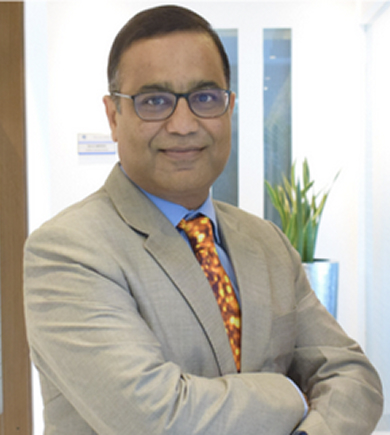
With over 25 years in Dubai and nearly 30 years as a Chartered and Management Accountant, Hemant has extensive experience across manufacturing, services and technology sectors. He has worked with major corporate groups including Al Tayer, Saif Al Ghurair, Dhabi, and Aditya Birla. Hemant specializes in profitability and cost management, debt restructuring, contract management, and regulatory compliance, having generated approximately USD 47.5 million in savings and profit growth. A confident public speaker and Distinguished Communicator, he lives by the quote: “You get what you reward for. If you want ants to come, you put sugar on the floor” (Charlie Munger), embodying his belief that “Profit has its own intelligence.”
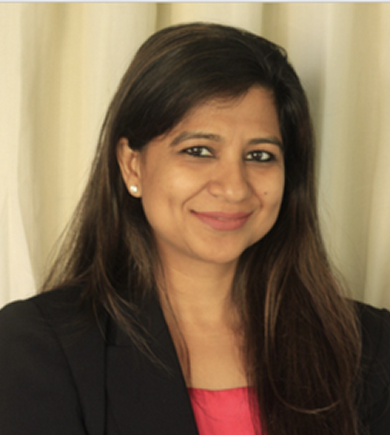
Archana Mundhra is a qualified Chartered Accountant with over 15 years of experience in multinational corporations. Her proficiency lies in financial planning and business intelligence. Her deep financial understanding and profound analytical skills empower her to assist management in realizing their objectives effectively.

Rinkle Jain is a qualified Chartered Accountant and Fellow Member of the Institute of Chartered Accountant of India. A results-driven Chartered Accountant with a distinguished career marked by proficiency in management, financial planning, and catalyzing overall company development.Demonstrates a unique blend of financial acumen, strategic insight, and leadership prowess, contributing significantly to organizational success.
test