


Key UAE Compliance Deadlines for Businesses (2026 – 2027)
The Total CFO, with a team of experienced Corporate Tax Consultants, helps businesses across Dubai and the UAE navigate Corporate Tax compliance, planning, and filing with confidence.
As the UAE’s Corporate Tax regime continues to evolve, businesses are required to adapt to new compliance obligations, maintain accurate financial records, and implement effective tax strategies. Whether you are a startup, SME, family business, Free Zone entity, or multinational company, understanding your Corporate Tax responsibilities is essential to avoiding penalties and ensuring long-term business success.


Why To Pay UAE Corporate Tax...
Navigating the UAE’s Corporate Tax regime requires more than basic compliance. Hiring a Corporate Tax Consultant in Dubai helps businesses understand their tax obligations, ensure regulatory compliance, minimize risks, avoid penalties, and implement effective tax strategies that support long-term growth.
A professional corporate tax consultant helps you:


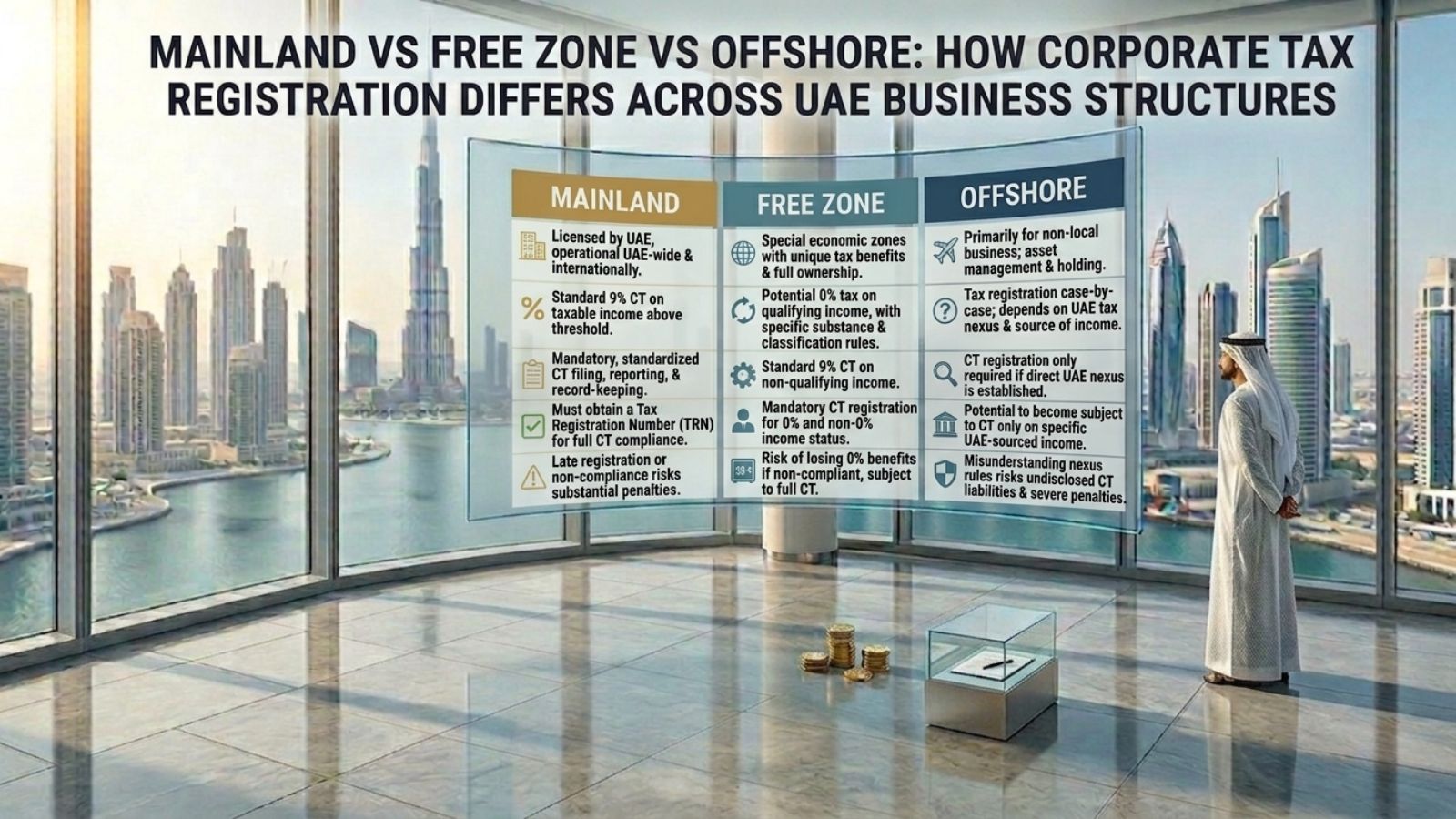
The UAE Federal Corporate Tax regime applies to financial years beginning on or after 1 June 2023 and impacts businesses that are incorporated, registered, or effectively managed and controlled within the UAE. It also extends to certain non-resident entities that have a Permanent Establishment (PE) or Nexus in the UAE.
Under the current Corporate Tax framework, businesses are subject to the following tax rates:
The Corporate Tax regime generally applies to juridical persons, including mainland companies, Free Zone entities, and certain foreign companies operating in the UAE. Natural persons may also become subject to Corporate Tax if they conduct business activities exceeding the prescribed turnover thresholds.
Understanding how Corporate Tax applies to your business, including whether you qualify for Free Zone incentives, Small Business Relief, exemptions, or transfer pricing obligations, is essential for maintaining compliance and achieving long-term tax efficiency. Professional guidance from experienced Corporate Tax Consultants can help businesses navigate these complexities with confidence.

We manage your end-to-end registration process through the EmaraTax platform, ensuring timely compliance and preventing penalties. We establish the complete compliance framework, including aligning your accounting policies with IFRS (International Financial Reporting Standards) for accurate financial statement preparation, which is the foundation for calculating Taxable Income and seamless filing.

UAE Corporate Tax requires every registered business to remain compliant for as long as it is on record. However, when a business closes, restructures, or no longer falls within the scope of taxation, deregistration is not optional, it becomes a requirement. Many businesses assume this happens automatically, but in reality, it must be actively initiated and properly completed.

Our strategic advice focuses on legally minimizing your tax liability and improving cash flow. We assess eligibility for all available reliefs and deductions, advise on optimal structures, and manage the process for Corporate Tax Group Formation. We guide businesses through necessary structural restructuring to ensure long-term tax efficiency and regulatory alignment.

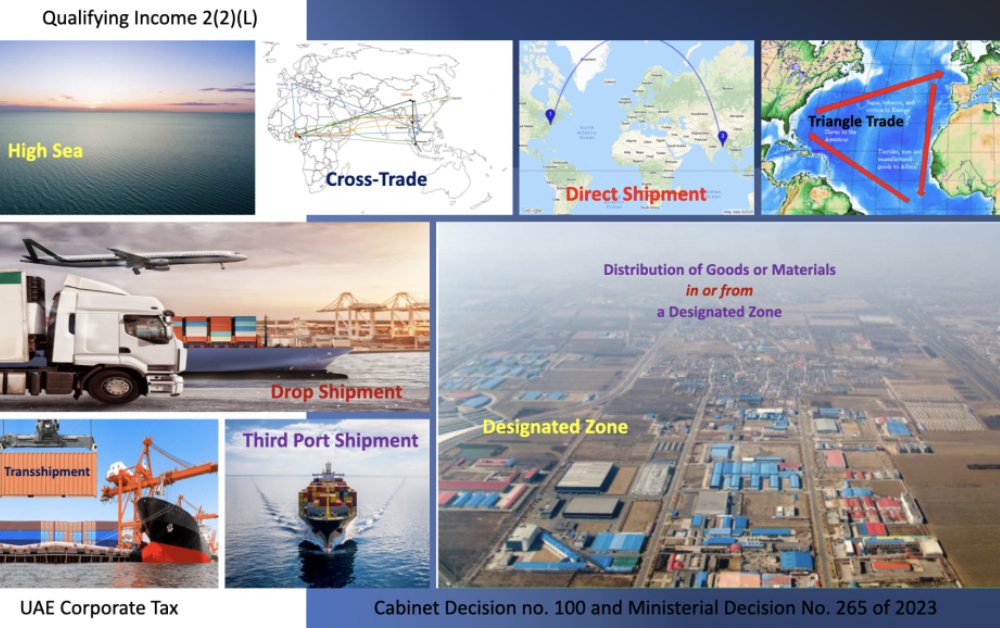
We conduct a detailed risk assessment of your structure, revenue streams, and systems to determine your precise tax obligations. A critical component is the analysis of Free Zone entities, ensuring compliance with Qualifying Income and Economic Substance requirements to maximize your eligibility for the 0% tax rate. We deliver a clear roadmap for full CT readiness.
Our UAE-registered Tax Agents are legally authorized to represent businesses before the Federal Tax Authority (FTA), ensuring seamless support for Corporate Tax compliance, filings, assessments, and regulatory matters.
Our team of experienced Corporate Tax Consultants helps businesses navigate the evolving UAE tax landscape through strategic tax planning, compliance management, and practical solutions tailored to their business needs.
Backed by over 100 years of collective experience in taxation, accounting, and financial advisory, we help businesses mitigate risks, avoid compliance pitfalls, and make informed financial decisions.
The Total CFO is a fully licensed and regulated tax consultant and accounting partner in Dubai, UAE, providing businesses with reliable, compliant, and growth-focused financial solutions.

Helping mainland businesses register for corporate tax, calculate taxable income, prepare returns, and maintain FTA compliance.
Supporting Qualifying Free Zone Persons (QFZPs), qualifying income assessment, transfer pricing requirements, and 0% corporate tax eligibility.
Helping startups and SMEs understand corporate tax obligations, maintain proper accounting records, and optimize tax positions.
Managing tax group formation, transfer pricing documentation, related-party transactions, and cross-border tax matters.
Supporting succession planning, restructuring, holding companies, and tax-efficient business operations.
Helping overseas companies determine permanent establishment exposure, UAE tax obligations, and treaty implications.
Supporting law firms, engineering firms, marketing agencies, consultants, architects, and other service businesses.
Helping online businesses determine taxable income, cross-border transactions, VAT interaction, and corporate tax obligations.

Many businesses struggle to identify deductible expenses, exempt income, and adjustments required under UAE Corporate Tax Law.
Qualifying for the 0% Corporate Tax rate requires meeting several conditions, and incorrect assumptions can result in unexpected tax liabilities.
Businesses engaged in related-party transactions need to assess transfer pricing obligations and maintain appropriate documentation.
Holding companies, family businesses, and multinational groups often require specialized tax structuring advice to ensure tax efficiency and compliance.
The UAE Corporate Tax framework continues to evolve through FTA Public Clarifications, Ministerial Decisions, and Cabinet Resolutions.
Businesses must maintain adequate records and supporting documentation to substantiate their tax positions.


The Total CFO has been instrumental in streamlining our corporate tax compliance. Their expertise and hands-on approach have made navigating complex regulations seamless, ensuring that we stay compliant and efficient. They have truly become an extension of our team, helping us focus on growth with confidence.
We had the pleasure of working with The Total CFO on corporate tax matters and several specialized tax studies, and the experience was highly positive. The team demonstrated a high level of professionalism, accuracy, and in-depth expertise, along with a strong commitment to deadlines.
Communication was clear and smooth, with complex tax procedures explained in a practical and understandable manner, enabling us to make well-informed decisions. We confidently recommend their services and look forward to continuing our collaboration.
I’ve had a great experience working with Mr. Hemant. He’s always been very helpful and offers insightful advice that really helps simplify financial decisions. He’s approachable and knowledgeable. I would definitely recommend The Total CFO to anyone looking for reliable and professional corporate tax support.
Partner with The Total CFO and experience the confidence of working with a dedicated team of corporate tax experts that understands your business inside out. With our expertise, you get reliable guidance, customized strategies, and complete support to manage your tax obligations while driving sustainable growth.
A Corporate Tax Consultant helps businesses understand and comply with UAE Corporate Tax regulations, including tax registration, tax planning, return filing, transfer pricing compliance, and ongoing advisory support.
Hiring a Corporate Tax Consultant helps businesses avoid penalties, ensure timely compliance, optimize their tax position, and stay updated with evolving Federal Tax Authority (FTA) regulations.
Yes. All taxable persons, including certain Free Zone entities, mainland companies, and eligible natural persons, are required to register for Corporate Tax through the FTA’s EmaraTax portal within the prescribed deadlines.
Yes. Although Qualifying Free Zone Persons may benefit from a 0% Corporate Tax rate on qualifying income, determining eligibility and maintaining compliance requires professional guidance.
Yes. Corporate Tax Consultants help businesses prepare tax computations, review financial records, ensure accurate disclosures, and file Corporate Tax Returns in compliance with FTA requirements.
Corporate Tax Consultants assist businesses in identifying related-party transactions, preparing transfer pricing documentation, complying with OECD guidelines, and mitigating transfer pricing risks.
Businesses may face penalties for delayed registration, late return filing, inadequate record keeping, incorrect disclosures, and failure to pay taxes on time. A Corporate Tax Consultant helps minimize these risks through proactive compliance management.
Businesses should look for experienced Corporate Tax Consultants with strong knowledge of UAE tax laws, FTA representation capabilities, industry expertise, and a proven track record in tax compliance and advisory services.


With over 25 years in Dubai and nearly 30 years as a Chartered and Management Accountant, Hemant has extensive experience across manufacturing, services and technology sectors. He has worked with major corporate groups including Al Tayer, Saif Al Ghurair, Dhabi, and Aditya Birla. Hemant specializes in profitability and cost management, debt restructuring, contract management, and regulatory compliance, having generated approximately USD 47.5 million in savings and profit growth. A confident public speaker and Distinguished Communicator, he lives by the quote: “You get what you reward for. If you want ants to come, you put sugar on the floor” (Charlie Munger), embodying his belief that “Profit has its own intelligence.”

Archana Mundhra is a qualified Chartered Accountant with over 15 years of experience in multinational corporations. Her proficiency lies in financial planning and business intelligence. Her deep financial understanding and profound analytical skills empower her to assist management in realizing their objectives effectively.

Rinkle Jain is a qualified Chartered Accountant and Fellow Member of the Institute of Chartered Accountant of India. A results-driven Chartered Accountant with a distinguished career marked by proficiency in management, financial planning, and catalyzing overall company development.Demonstrates a unique blend of financial acumen, strategic insight, and leadership prowess, contributing significantly to organizational success.
test