2026-07-18

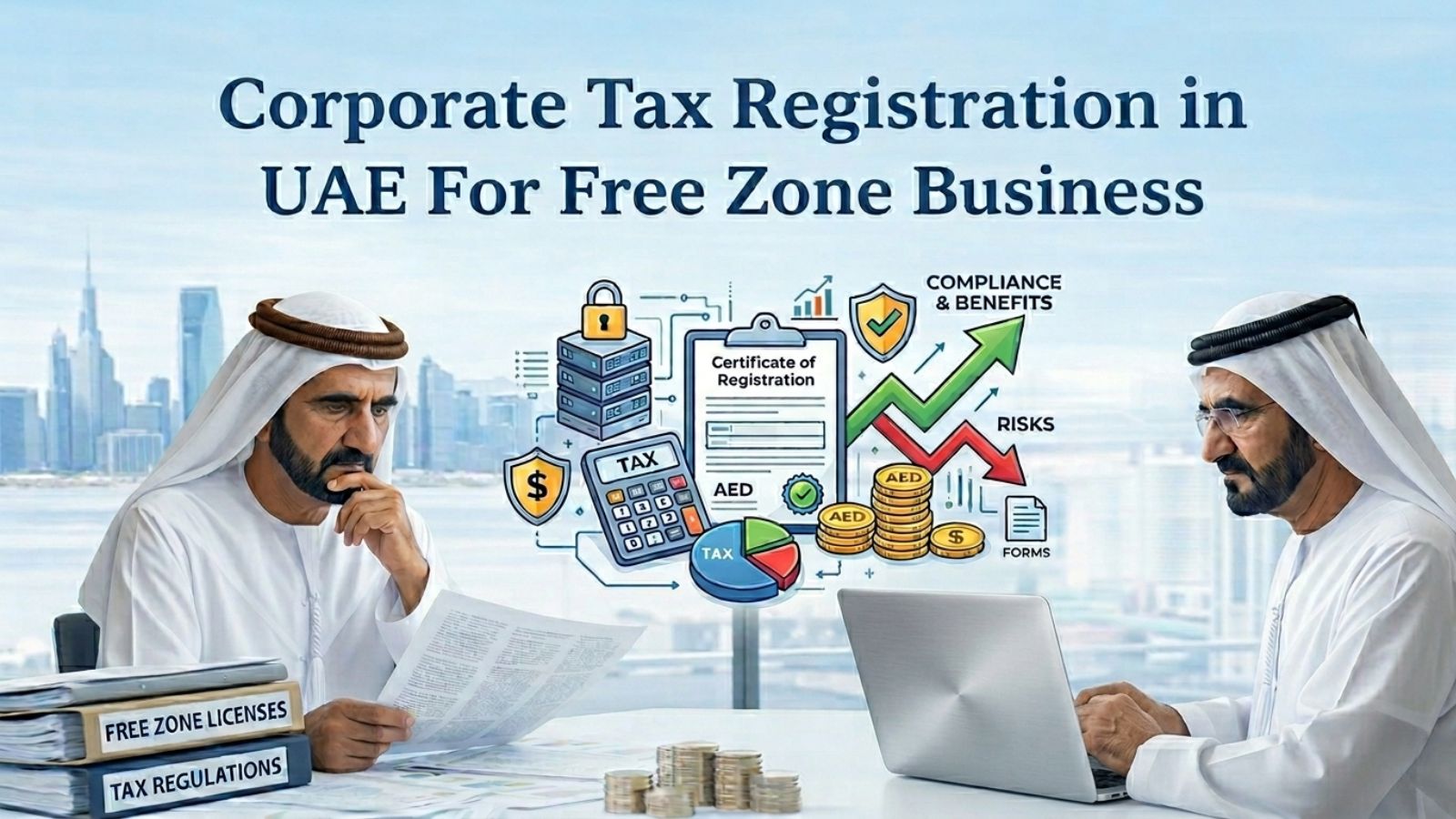
Over the past decades, the UAE has established itself as a tax-friendly business destination, especially for organizations running in the Free Zones. Since companies in Free Zones accrue 0% tax, more entrepreneurs were encouraged to conduct business in these areas.
Until, the new tax regime by the UAE government flipped the script.
The new Corporate Tax (CT) regime introduced in 2023 brought about a change in legislation, amending the rules for Free Zone companies. Although businesses in Free Zones still experience significant tax advantages, they’re no longer an exception to corporate tax.
Now, this change brought a wave of questions amongst companies in Free Zones — whether they needed to register for corporate tax, if they’d still remain eligible for 0% tax, and what consequences will follow in case they deal with mainland enterprises.
While the answer is that Free Zone businesses must now register for corporate tax, understanding how they can avoid compliance issues remains important. In this blog, we’re breaking down all aspects of the new corporate tax regime and what it means for businesses in the Free Zones.
Free Zone of UAE is a business zone created in order to attract foreign investments and support certain industries. Free Zones operate with their separate set of regulations governed by the Federal Tax Authority in the UAE, making it convenient for international companies to operate.
The purpose of Free Zones is to encourage business operations by streamlining the procedures involved, providing specialized industries, and creating laws to assist in the development of sectors such as commerce, technology, financial institutions, media, and logistics.
Some of the most prominent free zones in Dubai include:
Earlier, setting up businesses in Free Zones for foreign investors implied that they received a number of operational and financial benefits, such as:
The Corporate Tax (CT) is a federal tax that is levied on business profits. It was introduced to ensure that the country operates in alignment with global tax standards. It’s important to note that it affects the net income of businesses, and not revenue This further implies that companies are taxed on profits after adjusting expenses.
The corporate tax was introduced in the financial year of 2023, beginning 1st June 2023. It aimed to safeguard small companies from higher taxes and ensure that large corporations continue to pay a globally competitive tax.
It operates on the following framework:
While the corporate tax applies to the entire UAE, it affects various organizations differently:
Businesses in Free Zones will not be automatically exempt from paying Corporate Tax. Although a tax rate of 0% remains a possibility, it is applicable only for companies that fall into the category of Qualifying Free Zone Person (QFZP).
To maintain this status, a company has to be located within the Free Zone, generate qualifying income, and satisfy various requirements such as economic substance, proper implementation of transfer pricing policies, and submission of Corporate Tax filings. Sources of income include those earned from other Free Zone companies as well as overseas, excluding that from mainland UAE.
If a company has substantial non-qualifying income and fails to adhere to the stipulated requirements while lacking proper documentation, it will cease to be classified as a Qualifying Free Zone Person. As a consequence, it will have to pay Corporate Tax at a flat rate of 9%.
So, to conclude, the tax break of 0% still applies, but only under certain conditions.
It’s important to distinguish between qualifying and non-qualifying income to maintain the 0% Corporate Tax benefit.
Qualifying income is the income from transactions with other Free Zone companies and some foreign income (exports or provision of services abroad). Such operations are consistent with the Free Zone model.
Non-qualifying income stems from mainland UAE transactions, such as selling products to customers within the country. In addition, non-permitted services offered to mainland entities could result in non-qualifying income.
To be considered as a QFZP, it’s essential for your business to generate 95% or more of its income from qualifying sources. Otherwise, if the proportion of non-qualifying income is above 5%, a business will lose the privilege of being taxed at 0%. The corporation will have to pay the regular 9% rate on all taxable income.
Examples:
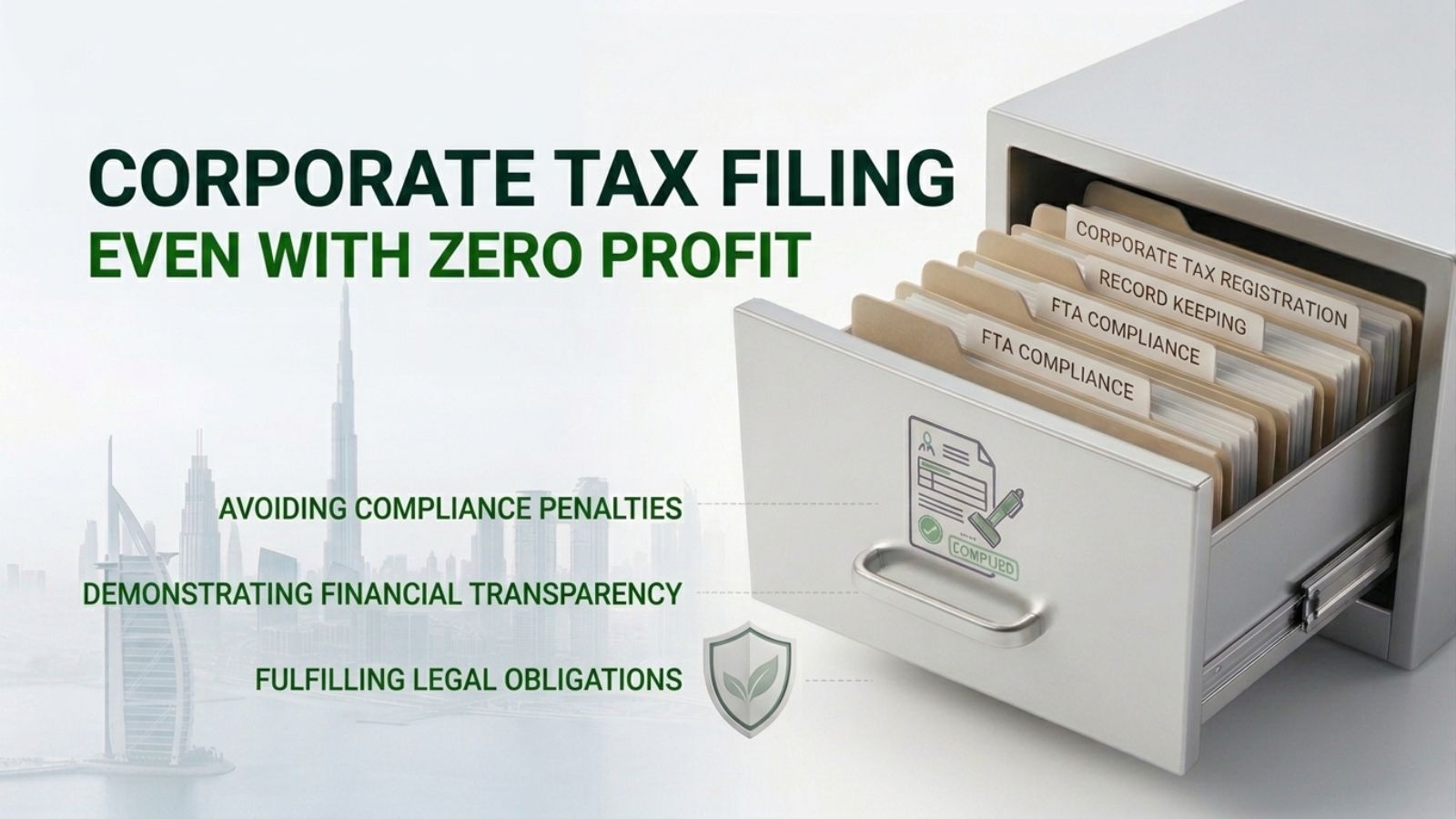
Corporation Tax registration is mandatory for all eligible businesses operating in the UAE, regardless of whether they’re operating in Free Zones and incur 0% tax.
The tax registration process is straightforward; begin by creating an account on the EmaraTax portal, submit all necessary company and financial documentation, and after approval, receive a Tax Registration Number (TRN).
Despite clear guidelines issued by the Federal Tax Authority, many enterprises operating in the Free Zones can make mistakes; often due to outdated approaches or minor oversights.
For example, a common mistake is the default assumption that registration is not required for businesses located in Free Zones. However, registration is mandatory, regardless of tax payable being 0%.
Furthermore, failure to meet deadlines related to registration and filing of declarations often leads to various complications. Added to this, businesses often misclassify income, incorrectly treating mainland or non-eligible revenue as qualifying income, thus putting their QFZP status at risk.
Finally, many businesses tend to overlook the economic factors. Simply being registered in a Free Zone isn’t enough, as authorities expect real operations, proper staffing, and legitimate business activity within the zone.
Most of these mistakes are caused by misunderstandings about the new rule. Identifying and solving them early can save both resources and compliance issues later.
Corporate Tax in the UAE has created a more complicated landscape for corporations operating within Free Zones, particularly when dealing with regulations concerning qualifying as a QFZP, categorizing income, and making regular declarations.
At The Total CFO, our team assists you in complying with the new Corporate Tax registration via EmaraTax portal. We start by determining whether your company is eligible for the 0% tax benefit, and ensure proper income classification. Our services extend beyond Corporate Tax registration and include tax planning and strategy implementation, preparation of corporate tax returns, transfer pricing documentation, and representation during FTA audits.
Many Free Zone businesses choose to work with our corporate tax consultants in UAE to save them from incurring fines, simplified processes, and allowing them to allocate more time to their growth.
So, the final verdict remains that registering for Corporate Tax is mandatory for all corporations, and there are certain criteria that must be met in order to qualify for the 0% tax benefit.
Want your business in the Free Zone to apply tax treatments correctly? Let us help you with our exceptional team exceptional accounting professionals
Yes, all Free Zone businesses are required to register for Corporate Tax, even if they qualify for a 0% tax rate. Registration is mandatory under the new UAE Corporate Tax regime.
A Qualifying Free Zone Person (QFZP) is a Free Zone business that meets specific conditions such as earning qualifying income, maintaining economic substance, and complying with transfer pricing and filing requirements, making it eligible for a 0% Corporate Tax rate.
Yes, but only if they meet the criteria of a QFZP. If the conditions are not fulfilled, the business will be subject to the standard 9% Corporate Tax rate.
Qualifying income includes earnings from other Free Zone entities or foreign sources, while non-qualifying income typically comes from transactions with mainland UAE businesses or non-permitted activities.
If non-qualifying income exceeds 5% of total revenue, the business may lose its QFZP status and will be subject to 9% Corporate Tax on its taxable income.
Key documents include a trade license, passport or Emirates ID of the owner or signatory, Memorandum of Association (MoA), business activity details, and financial year information.
With over 25 years in Dubai and nearly 30 years as a Chartered and Management Accountant, Hemant has extensive experience across manufacturing, services and technology sectors. He has worked with major corporate groups including Al Tayer, Saif Al Ghurair, Dhabi, and Aditya Birla. Hemant specializes in profitability and cost management, debt restructuring, contract management, and regulatory compliance, having generated approximately USD 47.5 million in savings and profit growth. A confident public speaker and Distinguished Communicator, he lives by the quote: “You get what you reward for. If you want ants to come, you put sugar on the floor” (Charlie Munger), embodying his belief that “Profit has its own intelligence.”


With over 25 years in Dubai and nearly 30 years as a Chartered and Management Accountant, Hemant has extensive experience across manufacturing, services and technology sectors. He has worked with major corporate groups including Al Tayer, Saif Al Ghurair, Dhabi, and Aditya Birla. Hemant specializes in profitability and cost management, debt restructuring, contract management, and regulatory compliance, having generated approximately USD 47.5 million in savings and profit growth. A confident public speaker and Distinguished Communicator, he lives by the quote: “You get what you reward for. If you want ants to come, you put sugar on the floor” (Charlie Munger), embodying his belief that “Profit has its own intelligence.”

Archana Mundhra is a qualified Chartered Accountant with over 15 years of experience in multinational corporations. Her proficiency lies in financial planning and business intelligence. Her deep financial understanding and profound analytical skills empower her to assist management in realizing their objectives effectively.

Rinkle Jain is a qualified Chartered Accountant and Fellow Member of the Institute of Chartered Accountant of India. A results-driven Chartered Accountant with a distinguished career marked by proficiency in management, financial planning, and catalyzing overall company development.Demonstrates a unique blend of financial acumen, strategic insight, and leadership prowess, contributing significantly to organizational success.
test