

2026-03-20

Double-Entry Accounting: A Beginner’s Complete Overview
2025-12-12

Accounting’s double-entry accounting system is widely regarded as one of the most essential aspects of accounting. It offers a systematic approach to accurately reflecting the financial transactions of an organisation. Double-entry accounting is necessary to begin learning how accounting works regardless of whether you are a business owner, student, or someone simply wanting to understand how accounting works.
This article explains double-entry accounting in layman’s terms and details the components of double-entry bookkeeping that allow you to accurately record your financial activities.
Double-entry accounting is an accounting framework that records each transaction against two accounts. Each debit has a matching credit and the sum of the debits is equal to the sum of the credits.
The double-entry method serves to ensure that all accounting records remain in balance (i.e., all accounts have equal debits and credits) while simplifying tracking of the financial position of the company and quickly identifying accounting errors.
Before the introduction of double-entry accounting, companies kept records of their transactions on a simple list of transactions. However, as the growth of business occurred and the need to maintain accurate records increased, the single-entry system was found to be unsatisfactory.
Companies required the ability to:
With the introduction of the double-entry bookkeeping system, companies were able to meet the aforementioned objectives. Get the best bookkeeping services in UAE with The Total CFO.
Any financial transaction made by an individual will affect this equation in that for every entry that increases one of the accounts within the equation, there must be an equivalent credit entry elsewhere.
When there is an increase in assets and expenses, they will be recorded as debit. When there is a greater charge (credit), they will be recorded as including an increase in liabilities and equity and/or an increase in revenue. The harder part about getting accustomed to the concepts within the double-entry accounting system is getting used to how the debits and credits are used. Through practice, one will become comfortable with these types of transactions.
A list of types of accounts can help categorise transactions within the double-entry bookkeeping system includes:
In both examples of the double-entry system, the debit and credit entries balance out exactly.
With the addition of paired entries, the chance of error in your financial records is greatly reduced; errors are easily discovered through matching debits with credits.
Double-entry bookkeeping services give you access to lots of detailed financial reports, e.g. balance sheets, income statements and cash flow statements and you can use these reports to make informed business decisions about your finances.
When your debit totals and your credit totals don’t match, there is a clear issue and will very likely expose potential fraud or misrepresentations.
If you plan to procure outside investment, apply for bank loans or prepare your company for a financial audit, double-entry bookkeeping is generally expected.
Even though the single-entry method may work for a small company, double-entry bookkeeping enables the required high degree of accuracy and transparency as expected in the 21st-century.
Double-entry bookkeeping is most beneficial to:
Although your current business might be small, there are many future opportunities for growth.
Though it is feasible to maintain ledgers manually, this often results in a laborious process and an increased chance of making mistakes. For this reason, many businesses have adopted accounting software such as:
These account tools will automatically calculate debit and credit in the background when transactions are logged into them.
The establishment of double-entry bookkeeping services serves as the foundation for the correctness of a financial system. It keeps records accurate, decreases the possibility of error and enhances an understanding of the actual state of your business. As such, it provides an excellent basis for further advanced examples and methodologies when learning to handle your finances and make future operational decisions more effectively.
Double-entry accounting is a system where every financial transaction affects two accounts—one debit and one credit—ensuring the books always remain balanced.
Double-entry provides higher accuracy, detailed financial reporting, easier error detection, and is essential for audits, loans, and business growth.
SMEs, large companies, freelancers, consultants, and businesses planning to scale or undergo audits all benefit from double-entry bookkeeping.
The system records transactions across five categories: assets, liabilities, equity, income, and expenses.
It may feel confusing at first, especially understanding debits and credits, but with practice—and the right software—it becomes easier.
Popular tools like QuickBooks, Xero, Zoho Books, and Tally automate debit and credit entries, making the process faster and more accurate.
With over 18 years of experience across MIS, management control, and senior finance roles, Archana Mundhra has strengthened financial systems for companies in manufacturing, trading, services, and technology. As CFO Partner at The Total CFO Management Consultancy and Director at A2R Info Solutions Pvt. Ltd., she specialises in reporting frameworks, budgeting, process optimisation, and operational discipline. She believes finance is about understanding the story behind the numbers and using it to drive better decisions.


With over 25 years in Dubai and nearly 30 years as a Chartered and Management Accountant, Hemant has extensive experience across manufacturing, services and technology sectors. He has worked with major corporate groups including Al Tayer, Saif Al Ghurair, Dhabi, and Aditya Birla. Hemant specializes in profitability and cost management, debt restructuring, contract management, and regulatory compliance, having generated approximately USD 47.5 million in savings and profit growth. A confident public speaker and Distinguished Communicator, he lives by the quote: “You get what you reward for. If you want ants to come, you put sugar on the floor” (Charlie Munger), embodying his belief that “Profit has its own intelligence.”
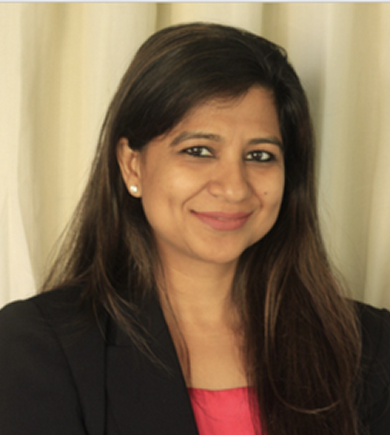
Archana Mundhra is a qualified Chartered Accountant with over 15 years of experience in multinational corporations. Her proficiency lies in financial planning and business intelligence. Her deep financial understanding and profound analytical skills empower her to assist management in realizing their objectives effectively.

Rinkle Jain is a qualified Chartered Accountant and Fellow Member of the Institute of Chartered Accountant of India. A results-driven Chartered Accountant with a distinguished career marked by proficiency in management, financial planning, and catalyzing overall company development.Demonstrates a unique blend of financial acumen, strategic insight, and leadership prowess, contributing significantly to organizational success.
test