
2026-08-21


A small business owner spends months carefully managing expenses. Every software subscription reviewed, supplier costs negotiated, and unnecessary spending cut wherever possible.
And then comes a penalty that exceeds all these expenses — all because of a single missed Corporate Tax deadline.
A mistake that could’ve been avoided entirely, Corporate Tax is often viewed by businesses as an expense to minimize, while the biggest costs often come from non-compliance.
Late registrations, missed filing deadlines, inaccurate submissions, and poor record preparation can quickly become more expensive than taking the right approach from the start.
Corporate Tax compliance doesn’t have to be complicated or costly. In this guide, we’ll explain how UAE SMEs can stay Corporate Tax compliant, reduce avoidable costs, and build a more efficient approach to tax compliance.
Business owners in the UAE often balance two priorities: meeting Federal Tax Authority (FTA) requirements while keeping compliance costs under control.
With that being said, most compliance problems don’t begin with filing mistakes, rather with a lack of clarity around obligations and deadlines that occur much earlier. That is why, understanding the correct treatments that apply to your business is important to reduce unnecessary costs and avoid penalties.
Almost all companies in the United Arab Emirates (UAE) have to determine if there is a need for registration for Corporate Tax. This applies to businesses registered on the mainland, Free Zone firms, and even other types of legal bodies engaging in economic activity in the UAE.
One mistake committed by many owners of small and medium enterprises (SMEs) is thinking that it is only when the business starts making profits that it is required to register for Corporate Tax. However, this is not always the case since registration has nothing to do with profits.
Ensuring compliance with Corporate Tax involves a lot of planning with respect to timing. Registration, deadlines, and payment deadlines all contribute to ensuring compliance.
However, for SME owners, it is vital that they become familiar with their first deadline for submitting their Corporate Tax Return. The reason is that the closer it is to the deadline, the higher the chances of making mistakes or facing other issues.
Small and medium-sized enterprises delay Corporate Tax compliance due to the administrative nature of the activity that can be done at a later time. Unfortunately, such delays often result in poor decision-making and non-compliance.
Rectifying a mistake after the deadline is missed is quite often more expensive than complying with Corporate Tax obligations from the start. Organizations that realize their compliance requirements early on will generally comply without difficulties.
Many SME owners worry about the cost of compliance services, but the reality is that penalties and corrective actions can lead to a much larger financial burden. Knowing potential risks can help you prioritize compliance before issues arise.
Registration for Corporate Tax late will be considered an administrative violation, which entails penalties and other costly consequences, which will lead to higher compliance costs and negatively affect the cash flow of business operations.
If you file the Corporate Tax Return past its due date, penalties and sanctions are likely to follow. Even those organisations that do not have to pay taxes but miss the filing deadline are subject to penalties.
Businesses may run into problems with their Corporate Tax Returns if there were any mistakes made. Additional documents may be needed to explain the discrepancy found during the compliance process.
Corporate Tax compliance includes maintaining records and other supporting documents to prove that all figures presented are correct. This process involves document management and preparation.
Preparing for Corporate Tax Filing Throughout the Year
The best way to manage compliance costs is to ensure that one prepares all through the year and not wait until just before filing of corporate taxes.
An SME must ensure that it keeps record of all revenue, expenses, business operations, and any other activities that could affect its Corporate Tax position. This ensures that preparing for the submission is much easier and reduces any mistakes in the records.
For a business, the required documents could include financial statements, accounting records, invoices, contracts, bank records, and other supporting documentation. Having such information easily available saves time and energy in the preparation process.
Last-minute preparation can lead to information gaps and missing documents, which can further make the process more difficult and costly.
Regardless of the differences between individual companies, there seem to be some compliance mistakes that occur quite regularly when dealing with Corporate Tax regulations.
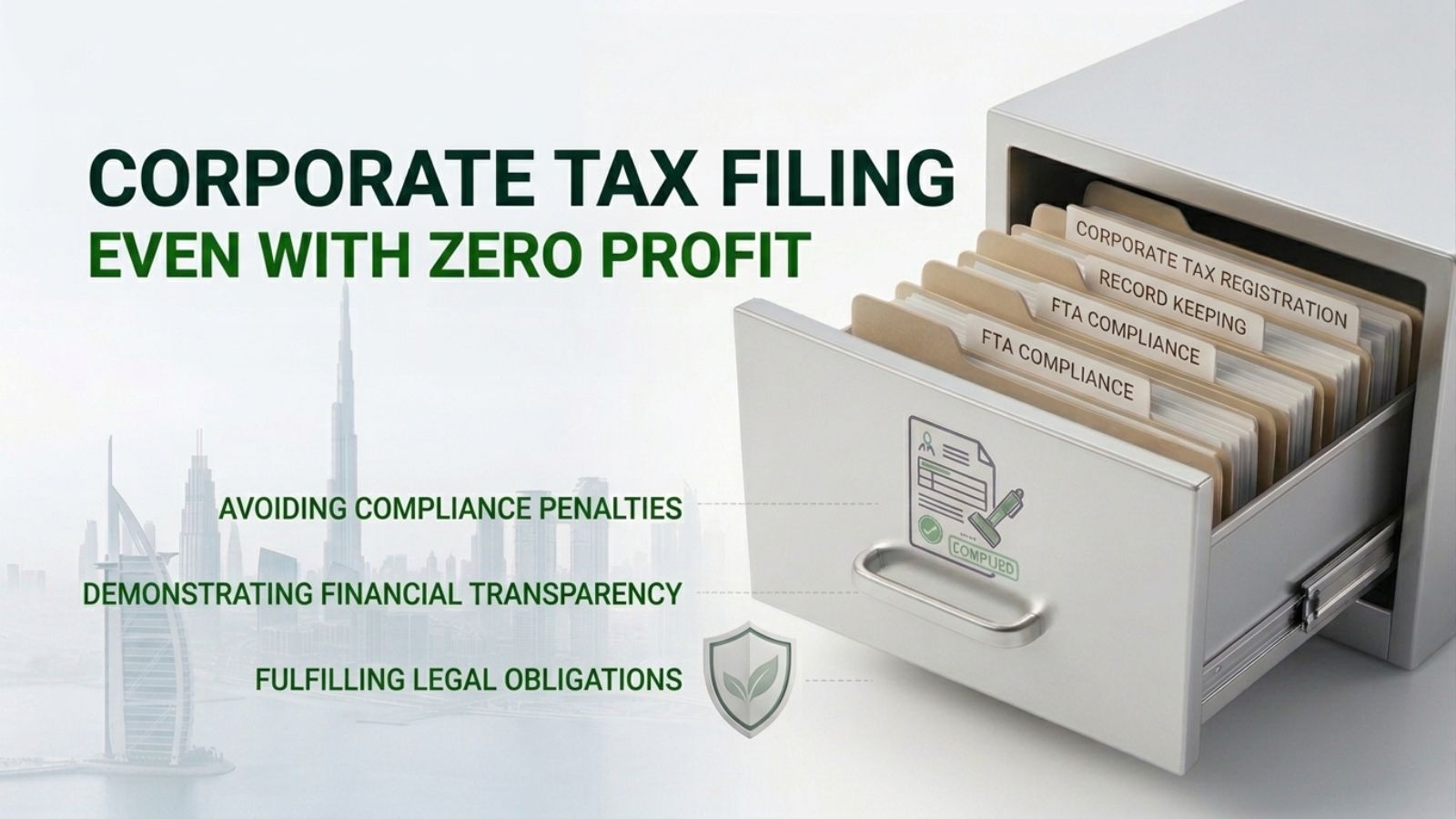
It’s often believed that businesses with minimal or zero profits do not have any obligations regarding taxes. The reality, however, suggests otherwise, and filing obligations might exist despite no profit generated.
One of the most common reasons why many companies face compliance problems is the failure to adhere to deadlines when filing their documents. Businesses that do not pay attention to this matter will find themselves having to pay unnecessary fines.
As the Corporate Tax framework changes, businesses need to stay updated about any information provided by the FTA, which includes changes in regulations.
SMEs usually only turn to professionals once they have run into some trouble with compliance. Getting advice earlier can help you avoid unnecessary troubles later on.
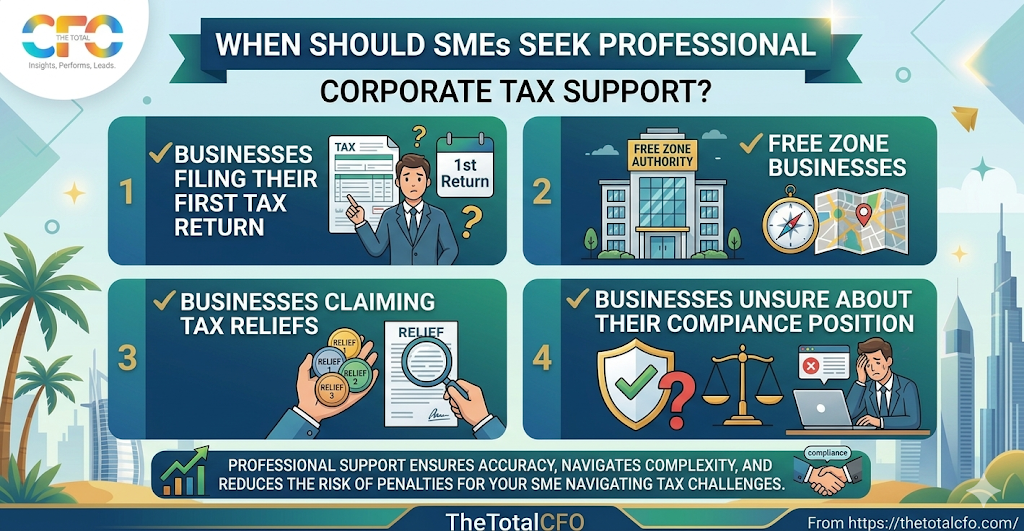
Compliance with Corporate Tax is not necessarily costly for UAE small and medium enterprises. In most situations, the highest costs tend not to result from compliance activities themselves, but from failures to meet deadlines, fines, inaccuracies in submissions, and poor preparation.
If your business takes time to understand your obligations, prepare for filing throughout the year, and address compliance requirements before deadlines arrive, you can effectively manage Corporate Tax efficiently and save costs on incurring penalties.
This proactive approach can also reduce compliance risks, avoid unnecessary expenses, and focus your team’s attention where it matters most, i.e. growing your business.
Want more control over your business’ financial future? Delegate your Corporate Tax requirements to The TotalCFO’s leading corporate tax consultant in Dubai. We’ll act as an extension of your tax function and map opportunities while focusing on deadlines and accurate documentation to help you stay compliant.
Schedule a free tax consultation with one of our experts today.
Most businesses operating in the UAE, including mainland companies and many Free Zone entities, are required to assess their Corporate Tax registration obligations. Registration requirements are not solely based on profitability, so businesses should review their eligibility carefully.
Missing the Corporate Tax registration deadline can result in administrative penalties imposed by the Federal Tax Authority (FTA). Delayed registration may also create additional compliance challenges and increase overall business costs.
Yes. Filing obligations may still apply even if a business has generated little or no profit. SMEs should verify their specific compliance requirements to avoid penalties for non-filing.
Businesses should retain financial statements, invoices, contracts, accounting records, bank statements, and other supporting documents. Proper record-keeping helps ensure accurate tax filings and simplifies compliance processes.
SMEs can lower compliance costs by understanding their obligations early, maintaining organized financial records throughout the year, monitoring deadlines, and addressing tax requirements proactively rather than waiting until filing season.
Professional guidance can help businesses understand complex tax requirements, avoid common compliance mistakes, prepare accurate filings, and reduce the risk of penalties, audits, and costly corrections in the future.
With over 25 years in Dubai and nearly 30 years as a Chartered and Management Accountant, Hemant has extensive experience across manufacturing, services and technology sectors. He has worked with major corporate groups including Al Tayer, Saif Al Ghurair, Dhabi, and Aditya Birla. Hemant specializes in profitability and cost management, debt restructuring, contract management, and regulatory compliance, having generated approximately USD 47.5 million in savings and profit growth. A confident public speaker and Distinguished Communicator, he lives by the quote: “You get what you reward for. If you want ants to come, you put sugar on the floor” (Charlie Munger), embodying his belief that “Profit has its own intelligence.”


With over 25 years in Dubai and nearly 30 years as a Chartered and Management Accountant, Hemant has extensive experience across manufacturing, services and technology sectors. He has worked with major corporate groups including Al Tayer, Saif Al Ghurair, Dhabi, and Aditya Birla. Hemant specializes in profitability and cost management, debt restructuring, contract management, and regulatory compliance, having generated approximately USD 47.5 million in savings and profit growth. A confident public speaker and Distinguished Communicator, he lives by the quote: “You get what you reward for. If you want ants to come, you put sugar on the floor” (Charlie Munger), embodying his belief that “Profit has its own intelligence.”

Archana Mundhra is a qualified Chartered Accountant with over 15 years of experience in multinational corporations. Her proficiency lies in financial planning and business intelligence. Her deep financial understanding and profound analytical skills empower her to assist management in realizing their objectives effectively.

Rinkle Jain is a qualified Chartered Accountant and Fellow Member of the Institute of Chartered Accountant of India. A results-driven Chartered Accountant with a distinguished career marked by proficiency in management, financial planning, and catalyzing overall company development.Demonstrates a unique blend of financial acumen, strategic insight, and leadership prowess, contributing significantly to organizational success.
test